
🧠 How to Prevent Cognitive Decline
🧬 What Science Says (2025–2026 Research)
A landmark clinical trial—the U.S. POINTER study (2025)—found that people who adopted a combination of healthy behaviors improved their cognitive function and slowed age-related decline. (Alzheimer’s Association)
These behaviors included:
- Regular exercise
- Healthy diet
- Cognitive stimulation
- Social engagement
- Monitoring overall health
Even more striking:
👉 Structured lifestyle changes protected memory and thinking over a 2-year period, regardless of genetic risk or background. (Alzheimer’s Association)
This aligns with broader research showing that diet, exercise, and social activity together—not separately—offer the strongest protection. (PMC)
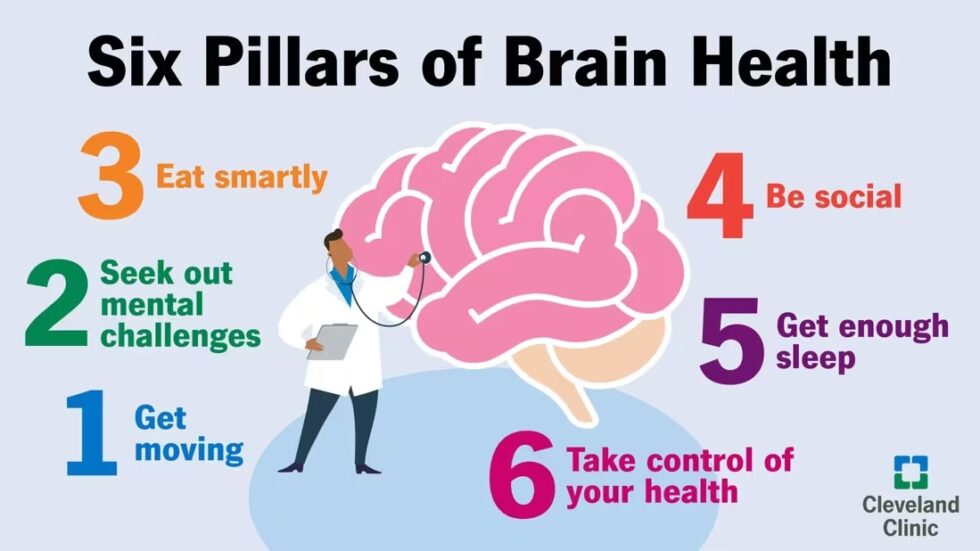
🧠 The 6 Most Effective Ways to Protect Your Brain
Below are simple, evidence-based actions you can start immediately.
1. 🚶 Move Your Body (Even a Little Helps)
You don’t need intense workouts.
- Just 3,000–5,000 steps/day may delay cognitive decline by years (The Guardian)
- Exercise improves memory in as little as 12 weeks (Prevention)
Why it works:
- Increases blood flow to the brain
- Boosts BDNF (a “brain growth” protein)
- Reduces inflammation
👉 Simple habit:
Start with a 20–30 minute walk daily.
2. 🥗 Eat for Brain Health
Diet is one of the strongest predictors of cognitive aging.
A 2026 study of ~160,000 people found:
👉 The DASH-style diet reduced cognitive decline risk by ~41% (The Washington Post)

Best foods:
- Leafy greens
- Berries
- Nuts
- Fish
- Olive oil
Limit:
- Sugar
- Processed foods
- Saturated fats
👉 Simple habit:
Add one “brain meal” per day (e.g., salmon + greens + olive oil).
3. 😴 Protect Your Sleep
Sleep is when your brain cleans itself.
Poor sleep is linked to:
- Reduced brain volume
- Worse cognitive performance
- Increased dementia risk (arXiv)
Also:
- Improving sleep reduces risk factors like blood pressure and sleep apnea, which impact cognition (Alzheimer’s Association)
👉 Simple habit:
Aim for 7–9 hours, consistent schedule, dark room.
4. 🧩 Challenge Your Brain
Your brain works like a muscle—use it or lose it.
In clinical trials:
- Regular cognitive training and learning activities improved thinking and memory (Alzheimer’s Association)
Examples:
- Learning a new skill
- Reading and writing
- Strategy games
- Even meaningful conversations
👉 Simple habit:
Spend 20–30 minutes/day learning something new, such as a new language (try Duolingo!)

5. 👥 Stay Socially Connected
Social isolation is a major risk factor for cognitive decline.
Research shows:
- Social engagement improves cognition and resilience (AARP)
Why?
- Stimulates multiple brain systems
- Reduces stress
- Encourages healthier behaviors
👉 Simple habit:
Schedule at least 2–3 meaningful interactions per week
6. ❤️ Protect Your Heart = Protect Your Brain
What’s good for your heart is good for your brain.
Key risk factors:
- High blood pressure
- Diabetes
- Obesity
The POINTER trial showed that monitoring and improving these markers improves cognitive outcomes (Alzheimer’s Association)
👉 Simple habit:
Check:
- Blood pressure
- Blood sugar
- Cholesterol
🧭 The Most Important Insight
The biggest takeaway from modern research:
👉 No single habit is enough—but together, they are powerful.
In fact, scientists now describe lifestyle as a “prescription” for brain health. (natap.org)
🌿 A Simple Daily Routine
If you do nothing else, aim for this:
- 🚶 Walk 20–30 minutes
- 🥗 Eat one brain-healthy meal
- 🧠 Learn something new (15–20 min)
- 👥 Connect with someone
- 😴 Sleep 7–8 hours