
Why Stress Settles in Your Jaw and What Helps TMJ Pain
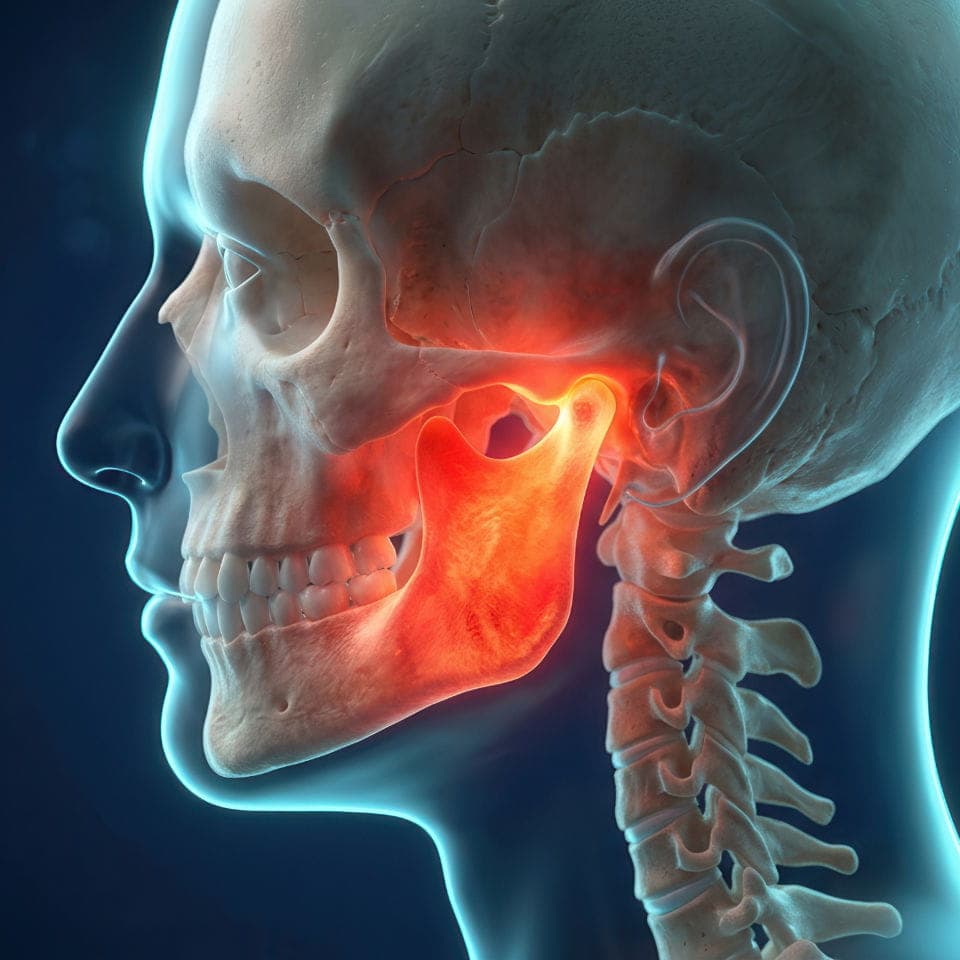
Jaw pain is easy to dismiss until chewing feels tiring, a headache settles near the temples, or the mouth no longer opens comfortably. These symptoms are often described as “TMJ,” but TMJ is the joint itself. The condition is more accurately called a temporomandibular disorder, or TMD.
TMD can affect the jaw joints, the muscles that move the jaw, or both. Stress and clenching may contribute, but they are not the only possible causes. The encouraging news is that many cases are temporary and improve with conservative care.
What the Temporomandibular Joint Does
There is one temporomandibular joint just in front of each ear. Each joint works like a sliding hinge, allowing the lower jaw to open, close, and move from side to side. A small cartilage disk helps the joint move smoothly.
TMD pain may come from the chewing muscles, irritation within the joint, or a combination of both. The exact cause can be difficult to identify because several factors often overlap.

Common Symptoms
Symptoms of a temporomandibular disorder may include:
- Pain or tenderness in the jaw or face
- Pain in one or both jaw joints
- Aching near the ear or temples
- Pain or difficulty while chewing
- Headaches or neck discomfort
- Limited movement or locking of the jaw
- Painful clicking, popping, or grinding
Clicking without pain or restricted movement is common and usually does not need treatment. Pain, loss of function, or symptoms that keep returning are more important than sound alone.
Why Stress Can Make the Jaw Hurt
Stress can change the way the body holds itself. During a deadline, difficult conversation, or long period of concentration, you may bring your teeth together, press the tongue upward, tighten the shoulders, or hold your breath without noticing. The masseter muscles in the cheeks and the temporalis muscles near the temples can remain active long after they are needed.
Over time, that muscle bracing may contribute to fatigue, tenderness, headaches, and pain while chewing. Pain can then create more guarding: you monitor the jaw, move it cautiously, and tighten nearby neck and shoulder muscles. A 2025 systematic review of 21 studies found significant associations between TMD and stress, anxiety, depression, and somatization. That does not mean the pain is imaginary or that stress is always the cause. It means the nervous system, muscles, and life circumstances can all be relevant.
Other Causes and Risk Factors
TMJ disorders may also be associated with jaw injury, arthritis, changes in the joint’s cushioning disk, connective-tissue conditions, fibromyalgia, sleep disturbances, smoking, and habits such as gum chewing, nail biting, or tooth clenching and grinding.
Sleep bruxism is different from conscious daytime clenching. It may occur around brief sleep arousals and can be associated with genetics, caffeine, alcohol, tobacco, certain medicines, or sleep disorders. Morning soreness, worn teeth, loud snoring, gasping, or significant daytime sleepiness should be discussed with a dentist or healthcare professional.
Five Steps That May Calm a Stress-Related Flare
1. Let the Teeth Separate
At rest, the upper and lower teeth do not need to touch. Several times a day, allow the lips to meet comfortably while the teeth remain slightly apart. Let the tongue rest gently and lower the shoulders. Use an email reminder or phone alarm until the check becomes automatic.
2. Reduce the Jaw’s Workload Temporarily
For a few days, choose foods that require less chewing and avoid gum, chewy candy, very crusty bread, wide yawning, and repeatedly testing the jaw. This is a short-term reset, not a permanent restricted diet.
3. Try Heat or Cold and Gentle Movement
The National Institute of Dental and Craniofacial Research recommends conservative measures such as heat or cold used with gentle exercises. A dentist or physical therapist can show you movements appropriate for your specific problem. Avoid forcing the jaw open or pressing aggressively into a painful joint.
4. Track Clenching and Stress Together
For one week, note when symptoms appear and what happened beforehand: concentrated computer work, driving, poor sleep, a difficult conversation, or a demanding workout. Also record whether pain is worse on waking or later in the day. Patterns help distinguish daytime bracing from a possible nighttime problem.
5. Begin With Conservative Professional Care
A dentist or clinician can check the teeth, joint movement, and chewing muscles. Depending on the diagnosis, care may include education, physical therapy, behavioral strategies, a protective oral appliance, or other reversible treatments. A 2026 review of 129 randomized trials supported education, behavioral therapy, and exercise as first-line options. Surgery is generally reserved for carefully selected problems after conservative measures have failed.
When to Seek Care
Make an appointment if jaw pain is persistent, keeps returning, interferes with eating, or limits opening and closing. Seek prompt care for a jaw locked open or closed, new swelling or fever, facial weakness, significant trauma, or severe tooth pain.
Massage cannot correct an injured joint or replace dental evaluation. When stress-related tension also involves the neck, shoulders, scalp, and chewing muscles, massage may support relaxation and body awareness as part of a broader care plan. Massage Therapy Center in Palo Alto offers a calm place to help the rest of the body stop bracing.